
What is a Data Warehouse?
According to Inmon, famous author for several data warehouse books, “A data warehouse is a subject oriented, integrated, time variant, non volatile collection of data in support of management’s decision making process”.
In order to store data, over the years, many application designers in each branch have made their individual decisions as to how an application and database should be built. So source systems will be different in naming conventions, variable measurements, encoding structures, and physical attributes of data. Consider a bank that has got several branches in several countries, has millions of customers and the lines of business of the enterprise are savings, and loans. The following example explains how the data is integrated from source systems to target systems.
Example of Source Data:
| System Name | Attribute Name | Column Name | Data Type | Values |
|---|---|---|---|---|
| Source System 1 | Customer Application Date | CUSTOMER_APPLICATION_DATE | NUMERIC(8,0) | 11012005 |
| Source System 2 | Customer Application Date | CUST_APPLICATION_DATE | DATE | 11012005 |
| Source System 3 | Application Date | APPLICATION_DATE | DATE | 01NOV2005 |
In the aforementioned example, attribute name, column name, datatype and values are entirely different from one source system to another. This inconsistency in data can be avoided by integrating the data into a data warehouse with good standards.
Example of Target Data (Data Warehouse):
| Target System | Attribute Name | Column Name | Data Type | Values |
|---|---|---|---|---|
| Record #1 | Customer Application Date | CUSTOMER_APPLICATION_DATE | DATE | 01112005 |
| Record #2 | Customer Application Date | CUSTOMER_APPLICATION_DATE | DATE | 01112005 |
| Record #3 | Customer Application Date | CUSTOMER_APPLICATION_DATE | DATE | 01112005 |
In the above example of target data, attribute names, column names, and datatypes are consistent throughout the target system. This is how data from various source system is integrated and accurately stored into the data warehouse.
Data Warehouse Architecture Diagram:
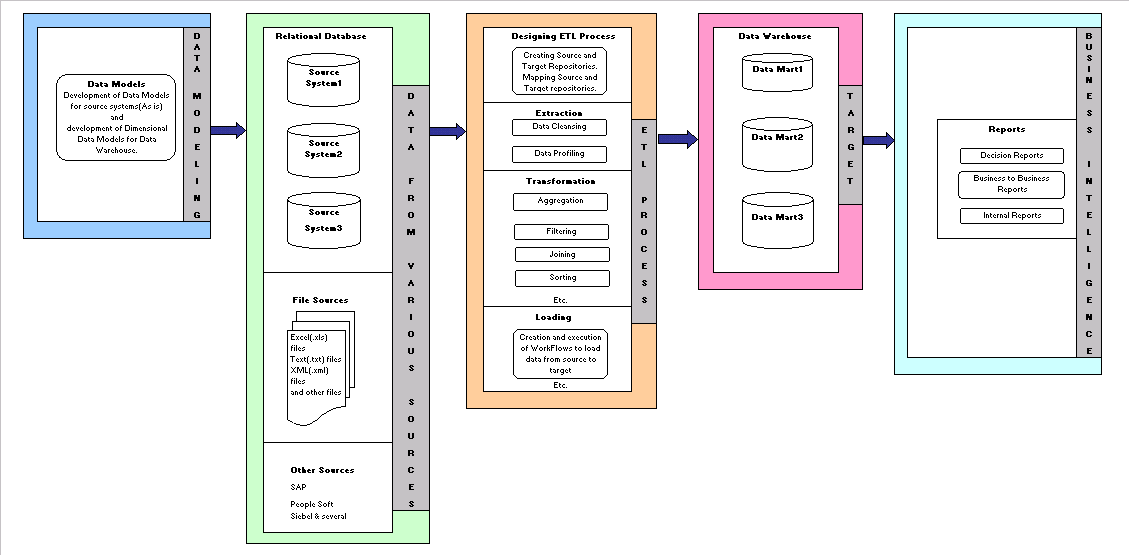
Easy to Understand. 4 stars. Any videos?